

How does AR work?
When children move across to using AR, (usually at the end of Year 2 / first terms of Year 3), they will take a ‘Star Test’ on a computer. The adaptive nature of this screening allows for a precise measure of a student's reading level in a shorter amount of time, typically around 20 minutes. The screening will then generate a ZPD range for each individual child and the teachers and pupils will then work together to choose books from within this range. Star Tests will routinely be taken 4 times during the year to ensure that ZPD ranges can shift accordingly alongside the children making progress with their reading.
What is a ZPD range?
ZPD stands for ‘Zone of Proximal development.’ This indicates the range of books that a child will be able to successfully read and comprehend. A ZPD range bridges the gap between what a learner can do without help and what they can achieve with guidance and support. It represents the range of skills a child is capable of acquiring with their reading, but has not yet mastered, thus giving them an appropriate level of challenge.
Is my child’s book too easy?
Sometimes it may appear that a book is too easy, as your child is able to decode it with no hesitation and can move through reading the book at a quick pace. However, this is where AR really lets us develop the reader as a school, considering the readerly skills which go beyond decoding. These skills include fluency, accuracy and comprehension as well as a child’s overall engagement with the book. The benefit of children choosing within a range means that sometimes they may pick a book that they can read with more ease, but at the same time, this will allow them to engage in more in-depth discussions with you to develop other skills such as inference and prediction. It also allows children to practice key skills such as their use of intonation and expression. We often find that children will be able to tackle a focus area more confidently and successfully if they don't have to navigate a trickier level of word reading at the same time. As teachers, we keep a tight focus on the books the children are choosing and the skills that we want them to develop whilst also nurturing their desire and motivation to read – keeping in mind the all-important benefits of reading for pleasure.
Book Quizzes
After a child has read a book, they will take a short comprehension quiz on the computer. This will usually be 5 questions which ascertain a child’s overall engagement and understanding of the text. Teachers can monitor these quiz results and can then intervene in a timely way if any anomalies are flagged up, especially since AR also supports teachers in unpicking exactly which areas may be causing any issues. Each time a child passes a quiz, the word count of the book will be added on to their individual word count total.
How can I support my child on their AR journey?
From the moment your child starts school here at Miers Court, we encourage them to share books with you at home to help them on their journey to becoming life-long learners. Just like you are used to in KS1, we encourage children to still read daily at home and, importantly, to discuss their books with an adult. Within the year group termly newsletters, you will always find helpful ideas and suggestions around home reading. Depending on the book your child has, they don’t necessarily need to always read a large amount to be able to engage in rich discussion with you.
What if my child reads a book from home?
Brilliant – we are always really happy to hear this! What’s more, if this book is registered on the AR system, then your child will be able to quiz on this book in school and add to their word count total. All you need to do is look on the AR book finder website and search for the title of the book. If it shows up as being on the system, then let your child’s teacher know the exact title of the book, and they will be able to help your child to access the matching book quiz in school. All we ask is that you please let teachers know the name of the book as close as possible to your child finishing it, so that they can then quiz at the earliest opportunity.
Rewards and Incentives
Word Count Targets
As a school, we are always keen to celebrate the efforts and achievements of the children in all areas, both social and academic.
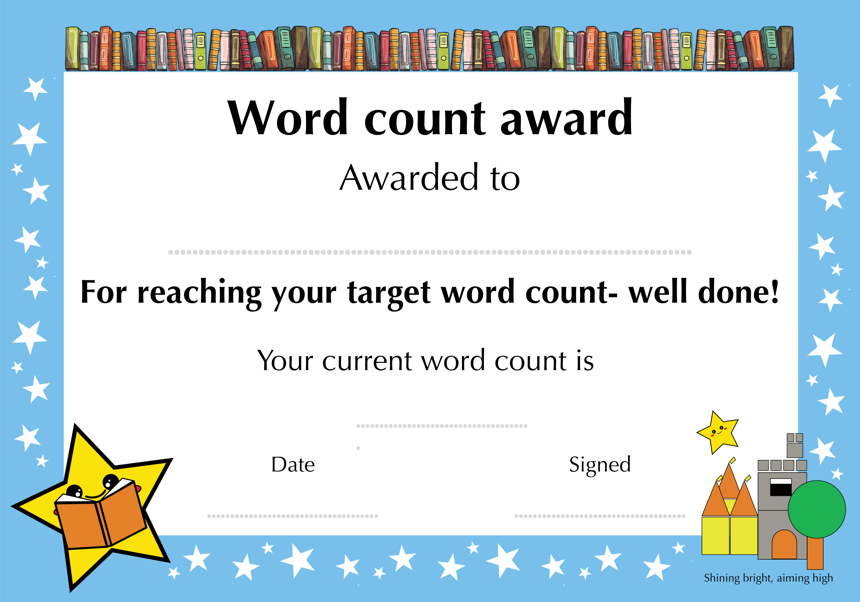
To further promote and incentivise reading, we offer celebratory certificates for when a child reaches their target word count. Within each year group, pupils will have a target amount of words to read. When a child passes a quiz, the word count of that book adds to their total. Since all each child reads books within their individual ZPD, all abilities of reader have the opportunity to read successfully and add to their word count. Adaptations to word counts will of course be made where necessary.
Pupil word count targets by year group:
| Year 1 (if applicable) | 1000 words |
| Year 2 | 2000 words |
| Year 3 | 10,000 words |
| Year 4 | 50,000 words |
| Year 5 | 100,000 words |
| Year 6 | 500,000 words |
Teachers are able to monitor individual children’s word counts in order to guide and motivate them along the way. Each week, teachers will be able to celebrate word count progress and achievements in class too.
If a child reaches their year group word count target, they will be presented with one of our new school certificates during celebration assembly. Remember: the more words a child reads, the more practise they are getting in developing their fluency.
Year Group Progress
Each term, there are also celebrations and year group prizes for the number of quizzes taken, and the progress made against Week 1 word count compared to the end of term. Word count can only ever go up for a child, so there will always be reason to celebrate!
Mrs Ridley's library display board celebrates class word count totals each week, too!
Individual Success Stories
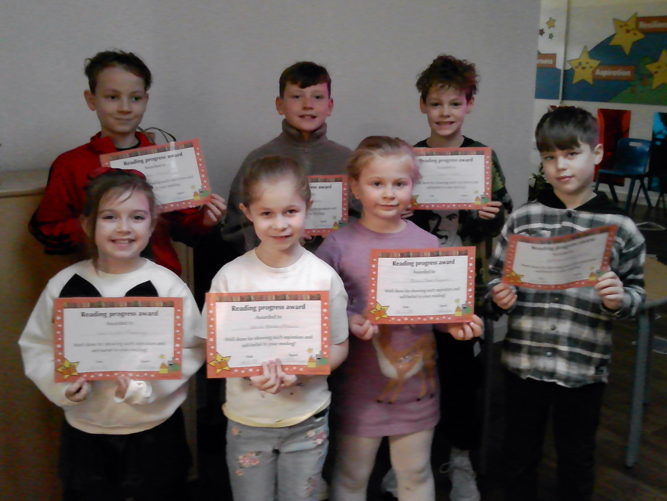
3 times a year, we also celebrate the individual reading achievements of a child in each class. This will be a child who has demonstrated a positive attitude to their reading and who has shown our school values of aspiration and self-belief to embrace their individual reading journey. Have a look at some of our recent well-deserving recipients of these awards.
Word Millionaires
We recognise that some of our children will move beyond their year group word count targets, so as a school we also celebrate our ‘word millionaires’ – children who manage to read a million words or more. They will be presented with a special badge and a new reading book to recognise this fantastic milestone!

Thank You!
We continue to be immensely grateful for the support of our PTFA and school community. Donations from the PTFA and the profits from our book fayres have so far helped us to purchase many new books for the school library. This helps us to ensure that we are always keeping our offer current and inviting for the children.
As ever, thank you for your continued support and enthusiasm in helping us create life-long learners who strive to demonstrate our school values in all that they do.
If you have any questions surrounding Accelerated Reader, then please don’t hesitate to get in touch. You can email FAO Mrs Papandrea via the school office address.